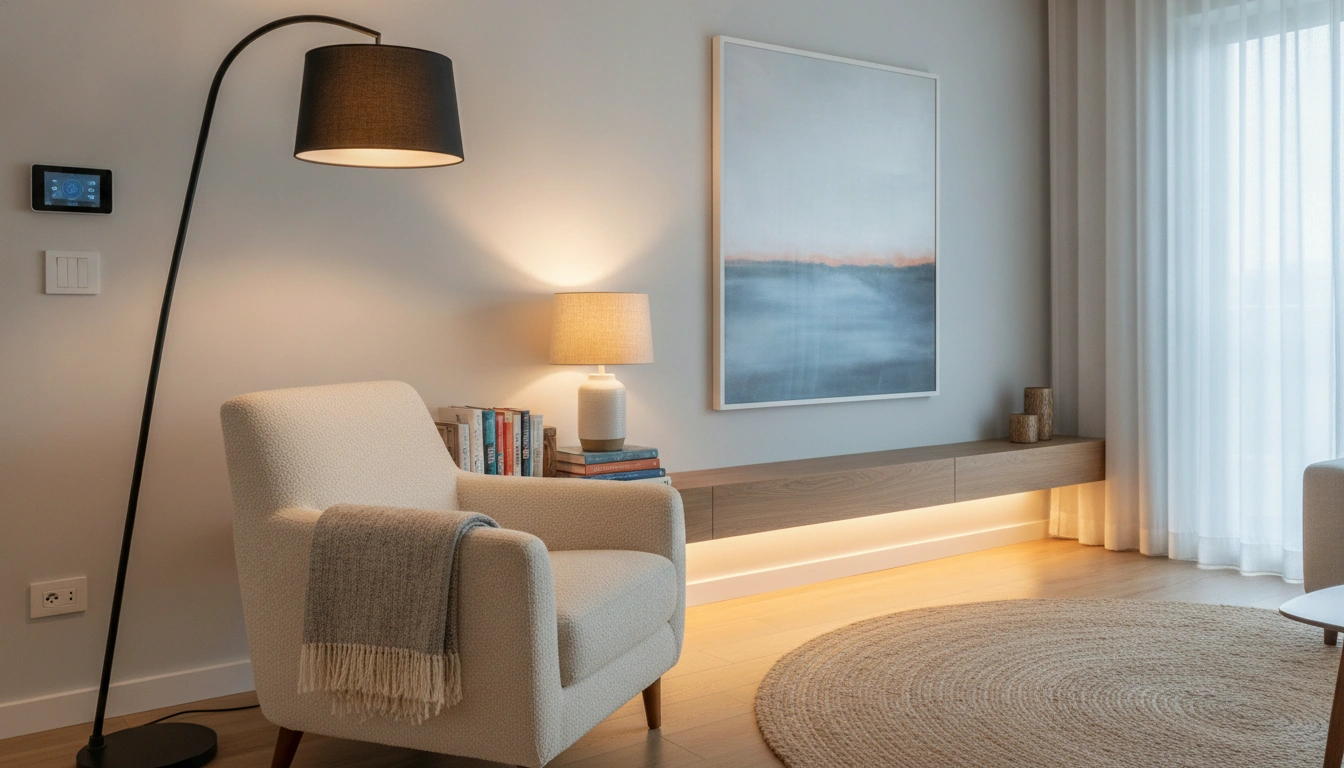
A good lighting plan layers multiple light sources so the room feels comfortable, functional, and visually balanced at any time of day. Instead of relying on a single ceiling fixture, build a mix of ambient, task, and accent lighting that matches how the space is actually used.
List the activities that happen in the room (reading, cooking, relaxing, working, getting ready). Note where those activities occur and whether you need focused brightness, soft glow, or flexible lighting that can change throughout the day.
Ambient lighting provides overall illumination (ceiling lights, recessed cans, flush mounts). Task lighting adds targeted light where you need it (desk lamps, under-cabinet lights, vanity lights). Accent lighting highlights features and adds depth (wall sconces, picture lights, shelf lighting).
Place lights where they solve a problem: a pendant over the dining table, sconces flanking a mirror, a floor lamp near a sofa corner, or under-cabinet strips to eliminate countertop shadows. Avoid putting task lighting directly behind you, which can cast shadows onto your work surface.
Dimmers are the fastest way to make one room work for many moods. Consider separate switches for different layers (for example, overhead on one switch, lamps on another). If rewiring isn’t practical, smart bulbs or plug-in dimmers can add control without major changes.
Warm white (around 2700K–3000K) tends to feel cozy in living rooms and bedrooms, while neutral (3000K–3500K) often works well for kitchens and baths. Keep bulb color consistent within the same sightline so the room doesn’t look patchy.
For a deeper walkthrough, examples, and a step-by-step checklist, visit How to design a lighting plan for a room.
Look for LED bulbs labeled “Soft White” or “Warm White,” typically 2700K to 3000K. Pair them with dimmers when possible to keep the room comfortable from daytime brightness to evening relaxation.












Leave a comment